Semantic SEO: The Future of Search Engine Optimization
Search engines have evolved far beyond matching exact keywords. Today, Google and other search engines focus on understanding meaning, context, and user intent. This evolution has given rise to Semantic SEO—a smarter, more effective approach to search engine optimization.
Semantic SEO helps websites rank not just for individual keywords, but for entire topics, related queries, and user needs, leading to more sustainable and higher-quality organic traffic.
What Is Semantic SEO?
Semantic SEO is the process of optimizing content around topics, entities, and search intent, rather than focusing solely on exact-match keywords.
Instead of asking:
“Which keyword should I rank for?”
Semantic SEO asks:
“What is the user actually trying to learn or achieve?”
By addressing the full context of a search query, semantic SEO allows search engines to better understand your content and match it with relevant searches.
How Search Engines Use Semantic Understanding
Modern search engines rely on advanced technologies such as:
- Natural Language Processing (NLP)
- Machine learning and AI
- Entity recognition
- Knowledge graphs
These systems help search engines:
- Understand relationships between concepts
- Interpret synonyms and variations
- Recognize intent behind searches
- Deliver more accurate and helpful results
Semantic SEO aligns your website with how search engines now think and rank content.
Key Components of Semantic SEO
1. Search Intent Optimization
Semantic SEO focuses on satisfying different types of search intent:
- Informational (learn something)
- Navigational (find a specific brand or page)
- Commercial (compare options)
- Transactional (ready to buy)
Content optimized for intent performs better in rankings and conversions.
2. Topic Clusters & Topical Authority
Instead of creating isolated pages, semantic SEO builds topic clusters:
- One main pillar page covering a broad topic
- Multiple supporting pages covering subtopics
- Strong internal linking between them
This structure signals topical authority to search engines.
3. Entity-Based Optimization
Entities are people, places, brands, or concepts that search engines recognize.
Semantic SEO involves:
- Mentioning relevant entities naturally
- Explaining relationships between entities
- Providing context around key concepts
This improves content clarity and relevance.
4. Contextual Keyword Usage
Semantic SEO uses:
- Synonyms
- Related terms
- Natural language variations
- Long-tail and conversational phrases
This helps content rank for multiple related searches without keyword stuffing.
5. Structured Data & Schema Markup
Schema markup helps search engines understand:
- What your content is about
- How different elements relate to each other
- Important details like reviews, FAQs, services, and locations
Structured data enhances visibility through rich results and featured snippets.
6. Content Depth & Comprehensiveness
Semantic SEO favors content that:
- Covers a topic completely
- Answers related questions
- Provides examples, explanations, and insights
- Anticipates user follow-up queries
Comprehensive content improves engagement and ranking potential.
7. Internal Linking for Meaningful Relationships
Internal links in semantic SEO:
- Connect related topics
- Guide users logically through content
- Help search engines understand content hierarchy
- Distribute authority across pages
Benefits of Semantic SEO
- Higher rankings for multiple related keywords
- Better alignment with Google’s algorithm updates
- Improved user engagement and satisfaction
- Stronger topical authority
- Long-term, stable SEO performance
- Increased chances of featured snippets and AI summaries
Semantic SEO vs Traditional SEO
| Traditional SEO | Semantic SEO |
|---|---|
| Keyword-focused | Topic and intent-focused |
| Exact-match keywords | Contextual and related terms |
| Isolated pages | Topic clusters |
| Short-term tactics | Long-term strategy |
| Algorithm-sensitive | Algorithm-resilient |
Semantic SEO for Local & Business Websites
Semantic SEO is highly effective for:
- Local businesses
- Service-based websites
- E-commerce platforms
- Blogs and educational sites
For local SEO, semantic optimization helps search engines understand:
- Services offered
- Location relevance
- Customer intent
- Business credibility
Role of AI & LLMs in Semantic SEO
AI and Large Language Models (LLMs) enhance semantic SEO by:
- Understanding context and meaning
- Identifying related topics and entities
- Creating structured, user-friendly content
- Improving intent matching and content clarity
When combined with human expertise, AI-powered semantic SEO delivers exceptional results.
Best Practices for Semantic SEO
- Write for users first, not search engines
- Focus on answering real questions
- Use natural language and variations
- Build topic clusters and internal links
- Optimize for intent, not just keywords
- Keep content updated and relevant
Frequently Asked Questions (FAQs)
What is the main goal of Semantic SEO?
The main goal is to help search engines understand the meaning and intent behind content so it can rank for a broader range of relevant searches.
Is Semantic SEO better than traditional SEO?
Semantic SEO improves traditional SEO by focusing on topics, intent, and context, making it more effective and future-proof.
Does Semantic SEO help with Google algorithm updates?
Yes. Semantic SEO aligns with how modern algorithms evaluate content, making websites more resistant to ranking drops.
Is Semantic SEO important for small businesses?
Yes. It helps small businesses compete by ranking for multiple related searches and building authority in their niche.
Can Semantic SEO improve featured snippet rankings?
Yes. Well-structured, intent-focused content increases the chances of appearing in featured snippets and AI-generated summaries.
How Semantic SEO Impacts Modern SEO and Its Role in Search Rankings
Modern SEO has moved far beyond keywords and backlinks. Today, search engines focus on understanding meaning, context, and user intent. This shift has made Semantic SEO one of the most important ranking factors in modern search engine optimization.
Semantic SEO plays a critical role in how content is discovered, evaluated, and ranked—especially in an AI-driven search environment.
Why Semantic SEO Matters in Modern SEO
Search engines no longer ask:
“Does this page contain the keyword?”
Instead, they ask:
“Does this page fully answer the user’s intent?”
Semantic SEO helps search engines interpret what content means, not just what words it uses. This change has reshaped modern SEO strategies.
How Semantic SEO Shapes Modern Search Engine Optimization
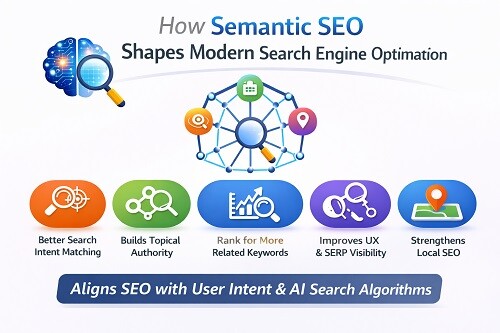
1. Improves Search Intent Matching
Semantic SEO allows content to match user intent rather than exact keyword phrases.
Impact on modern SEO:
- Higher relevance in search results
- Better engagement and lower bounce rates
- Increased rankings for related search queries
- More qualified traffic
2. Supports AI-Driven Search Algorithms
Modern search engines use AI, NLP, and machine learning to understand language.
Semantic SEO helps by:
- Structuring content logically
- Using natural, human-like language
- Covering topics comprehensively
- Aligning content with AI interpretation
This makes content more compatible with modern algorithms.
3. Helps Content Rank for Multiple Keywords
One semantically optimized page can rank for:
- Synonyms
- Long-tail queries
- Question-based searches
- Conversational and voice searches
This increases organic visibility without creating multiple similar pages.
4. Strengthens Topical Authority
Semantic SEO encourages building topic clusters rather than isolated pages.
Role in modern SEO:
- Signals expertise and authority
- Improves internal linking structure
- Helps search engines trust your website
- Leads to long-term ranking stability
5. Enhances User Experience (UX Signals)
Search engines measure how users interact with content.
Semantic SEO improves:
- Time on page
- Content readability
- Engagement and scroll depth
- Satisfaction with search results
Better UX signals contribute to stronger rankings.
6. Increases Visibility in SERP Features
Semantic SEO improves eligibility for:
- Featured snippets
- People Also Ask (PAA)
- AI-generated search summaries
- Voice search answers
This expands visibility beyond traditional blue links.
7. Improves Local SEO Performance
For local and service-based businesses, semantic SEO clarifies:
- What services are offered
- Where the business operates
- Who the target audience is
This improves performance in “near me” and location-based searches.
The Role of Semantic SEO in Modern SEO Strategy
1. From Keywords to Topics
Semantic SEO shifts strategy from keyword targeting to topic mastery.
Modern SEO focuses on:
- Covering all aspects of a topic
- Answering follow-up questions
- Providing depth and clarity
2. From Quantity to Quality
Search engines now reward:
- Helpful content
- Clear explanations
- Trustworthy information
Semantic SEO ensures content meets these quality standards.
3. From Short-Term Tactics to Long-Term Growth
Keyword-only SEO is vulnerable to algorithm changes.
Semantic SEO creates algorithm-resilient content that performs well over time.
4. From Search Engines to Users
Semantic SEO aligns SEO goals with user needs, which is the core objective of modern search engines.
Future Role of Semantic SEO in SEO
As search engines continue to evolve:
- AI search assistants will increase
- Conversational queries will grow
- Voice and visual search will expand
Semantic SEO will become the foundation of all effective SEO strategies, not just an optional technique.
Conclusion
Semantic SEO is a core pillar of modern SEO. It impacts rankings by improving relevance, authority, user experience, and compatibility with AI-driven search engines.
Businesses that adopt semantic SEO:
- Rank for more keywords naturally
- Build long-term authority
- Stay protected from algorithm updates
- Deliver better value to users
In modern SEO, semantic optimization is no longer an option—it is a necessity.
Semantic SEO is no longer optional—it is essential for modern search success. By focusing on meaning, intent, and relationships between topics, semantic SEO creates content that search engines trust and users value.
Businesses that invest in semantic SEO build long-term visibility, authority, and sustainable organic growth in an increasingly AI-driven search environment.