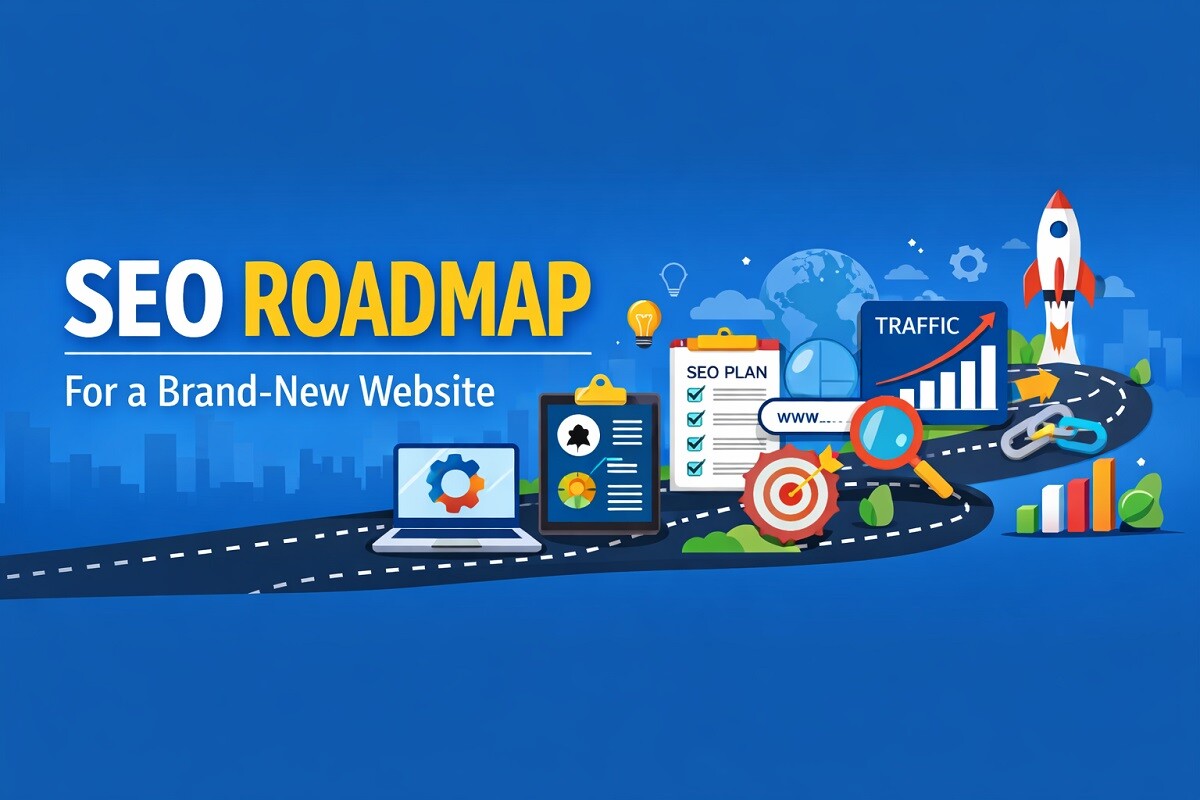
Launching a brand-new website is exciting, but it also comes with a big challenge—getting visibility on Google. Unlike established websites, a new site has no authority, no backlinks, and no trust in Google’s eyes. This is where a clear and well-planned SEO roadmap becomes critical.
This guide will walk you through a complete SEO roadmap for a brand-new website, explaining what to do, when to do it, and why it matters. Whether you’re a business owner, startup founder, or digital marketer, this roadmap will help you build strong SEO foundations and achieve sustainable rankings.
Understanding SEO for a New Website
SEO for a new website is very different from SEO for an old or established domain. Google treats new websites cautiously. This period is often referred to as the “Google Sandbox”, where rankings take time to improve even if you do everything right.
The goal in the early stage is not instant rankings but:
- Building trust
- Establishing topical authority
- Creating high-quality content
- Setting up a technically sound website
SEO is a long-term investment, and for new websites, patience and consistency are key.
Phase 1: Setting the Right SEO Foundation
Before writing content or building backlinks, your website must be technically ready for search engines.
Choosing the Right Domain and Hosting
Your domain name should be:
- Easy to remember
- Brand-focused
- Free from spam history
Always check the domain’s past using tools like Wayback Machine or backlink checkers. A clean domain helps avoid SEO penalties from the start.
Hosting plays a huge role in performance. Choose fast and reliable hosting with:
- Good uptime
- SSD storage
- Server locations close to your target audience
Installing SSL and Securing the Website
Google prioritizes secure websites. Installing an SSL certificate (HTTPS) is mandatory for SEO. It protects user data and improves trust signals, which directly impact rankings.
Mobile-Friendly and Responsive Design
Google uses mobile-first indexing, meaning it primarily evaluates the mobile version of your website. Ensure:
- Responsive design
- Easy navigation on mobile
- Fast mobile loading speed
A poor mobile experience can hurt rankings even if your desktop version looks perfect.
Phase 2: Technical SEO Setup for New Websites
Technical SEO ensures that search engines can crawl, index, and understand your website properly.
Setting Up Google Search Console and Analytics
Immediately connect your website with:
- Google Search Console – to track indexing, keywords, and errors
- Google Analytics – to analyze traffic and user behavior
These tools are essential for monitoring SEO performance from day one.
Creating XML Sitemap and Robots.txt
An XML sitemap helps Google discover all important pages of your website. Submit it through Google Search Console.
Your robots.txt file should:
- Allow crawling of important pages
- Block unnecessary or duplicate pages (like admin or filter URLs)
Incorrect robots.txt settings can accidentally block your entire website from Google.
Fixing Basic Technical Issues
For a new website, ensure:
- Clean URL structure
- No duplicate pages
- Proper use of canonical tags
- Fast page loading speed
- No broken links or 404 errors
Technical cleanliness helps Google trust your site faster.
Phase 3: Keyword Research for a Brand-New Website
Keyword research is the backbone of your SEO strategy. New websites should avoid highly competitive keywords initially.
Focusing on Low-Competition Keywords
Instead of targeting broad keywords, focus on:
- Long-tail keywords
- Question-based searches
- Location-based keywords (if local)
For example, instead of targeting “SEO services,” target “SEO services for small businesses in India.”
Understanding Search Intent
Every keyword has an intent:
- Informational
- Navigational
- Commercial
- Transactional
New websites should start with informational and low-competition commercial keywords to build authority before targeting highly transactional terms.
Creating a Keyword Map
Assign keywords to specific pages:
- One primary keyword per page
- 2–4 secondary keywords
- Supporting semantic keywords
This avoids keyword cannibalization and keeps your site structure clean.
Phase 4: Website Structure and SEO-Friendly Architecture
Search engines prefer websites that are easy to navigate.
Creating Clear Site Hierarchy
Your website structure should look like this:
- Home
- Category / Service pages
- Blog posts or sub-pages
A flat structure (fewer clicks from homepage) helps pages get indexed and ranked faster.
Internal Linking Strategy
Internal linking helps:
- Pass link equity
- Improve crawlability
- Increase time on site
Every new blog should link to:
- Relevant service pages
- Related blog posts
- Important pillar content
This builds topical authority over time.
Phase 5: Content Strategy for New Websites
Content is the biggest ranking factor for SEO, especially for new websites.
Starting with Foundational Content
Begin with pillar content, such as:
- Ultimate guides
- Beginner tutorials
- Industry explainers
These pages should be detailed, helpful, and evergreen.
Publishing Consistent, High-Quality Content
For a new website:
- Publish 1–2 high-quality articles per week
- Focus on depth, not quantity
- Aim for 1200–2500 words for pillar blogs
Consistency signals freshness and reliability to Google.
Writing Content for Humans First
Avoid keyword stuffing. Instead:
- Use natural language
- Answer real user questions
- Add examples and explanations
Google rewards content that genuinely helps users.
Phase 6: On-Page SEO Optimization
On-page SEO ensures your content is optimized for search engines without harming readability.
Optimizing Title Tags and Meta Descriptions
Each page should have:
- Unique title tag with primary keyword
- Compelling meta description to improve CTR
Good click-through rates indirectly support SEO growth.
Proper Use of Headings (H1, H2, H3)
Structure content clearly:
- One H1 per page
- Logical use of H2 and H3
- Keywords placed naturally in headings
This improves readability and SEO performance.
Image Optimization
Images should be:
- Compressed for speed
- Named descriptively
- Optimized with alt text
Image SEO helps in Google Image search and improves accessibility.
Phase 7: Building Authority and Trust (EEAT)
Google evaluates websites based on Experience, Expertise, Authoritativeness, and Trustworthiness (EEAT).
Creating About, Contact, and Policy Pages
Every new website must have:
- About Us page
- Contact page
- Privacy Policy
- Terms & Conditions
These pages build trust for both users and search engines.
Author Profiles and Credibility
If you publish blogs:
- Add author bios
- Mention experience and expertise
- Link to LinkedIn profiles if possible
This improves perceived authority.
Phase 8: Backlink Strategy for New Websites
Backlinks are one of the hardest but most important SEO factors.
Starting with Safe and Natural Backlinks
For new websites, focus on:
- Business listings
- Local citations
- Profile backlinks
- Guest posts on relevant blogs
Avoid spammy links or paid backlink schemes.
Creating Link-Worthy Content
Content that attracts backlinks includes:
- Guides
- Checklists
- Case studies
- Statistics-based articles
The better the content, the easier link building becomes.
Outreach and Relationship Building
Manual outreach is effective:
- Connect with bloggers
- Share your content
- Offer value, not spam
Quality matters more than quantity in backlink building.
Phase 9: Local SEO (If Applicable)
If your business targets a specific location, local SEO is essential.
Google Business Profile Optimization
Create and optimize your Google Business Profile with:
- Accurate business details
- Images
- Regular updates
- Customer reviews
Local signals help new websites rank faster.
Local Content Creation
Publish location-based content such as:
- Service pages for cities
- Local guides
- Industry-specific local blogs
This improves visibility in regional searches.
Phase 10: Tracking, Analysis, and Continuous Improvement
SEO is not a one-time task.
Monitoring Performance
Track:
- Keyword rankings
- Organic traffic
- Indexing status
- User behavior
Use data to refine your strategy.
Updating and Improving Content
Update old content regularly:
- Add new information
- Improve readability
- Refresh keywords
Content freshness helps maintain and improve rankings.
How Long Does SEO Take for a New Website?
Typically:
- First indexing: 2–4 weeks
- Initial traffic: 2–3 months
- Stable rankings: 6–9 months
- Strong authority: 12+ months
SEO success depends on competition, consistency, and quality.
Final Thoughts
SEO for a brand-new website is a marathon, not a sprint. With the right roadmap, consistent execution, and patience, even a new website can compete with established players.
By focusing on strong technical foundations, quality content, user experience, and ethical link building, your website can grow steadily in traffic, authority, and conversions.
If you follow this SEO roadmap step by step, you won’t just rank—you’ll build a long-term digital asset that delivers results for years.
Leave a Reply