
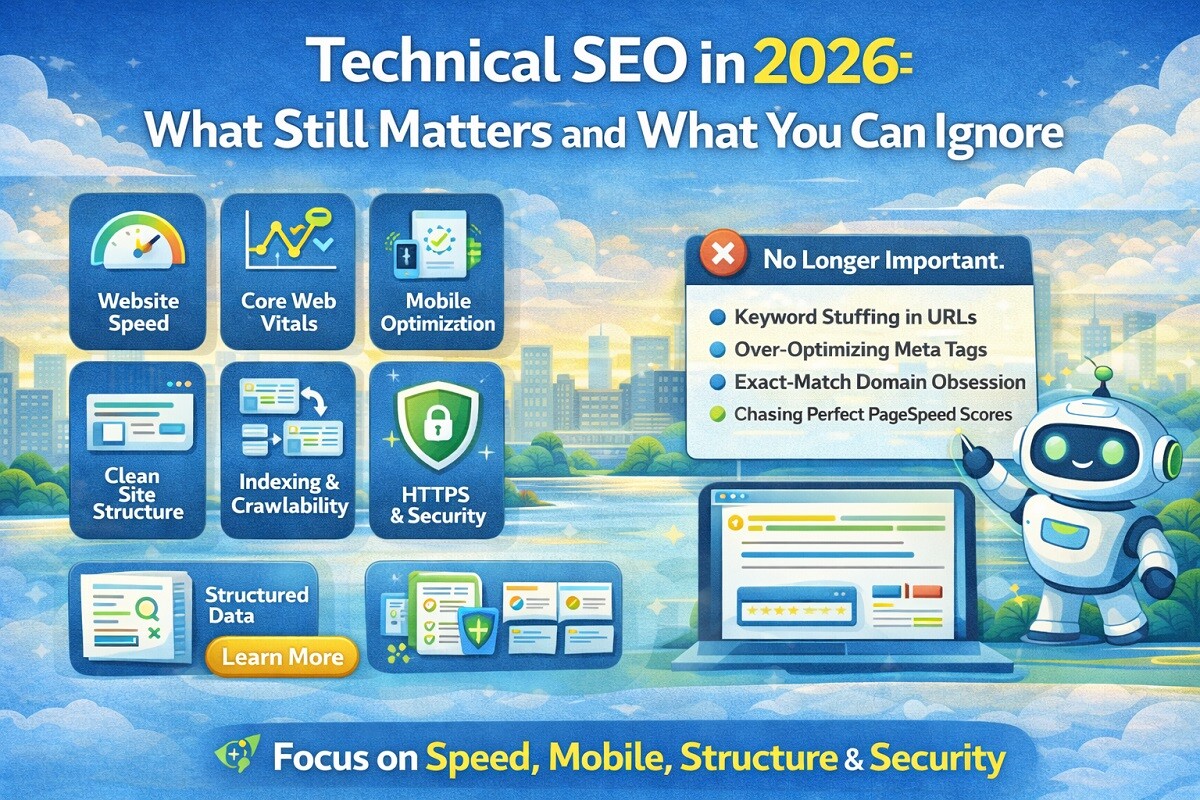
Technical SEO in 2026: What Still Matters and What You Can Ignore
Technical SEO is often seen as complex, but in 2026 it has become simpler and more focused. Search engines no longer reward websites for over-optimization or complicated setups. Instead, they prioritize speed, usability, clarity, and accessibility.
If your website is technically strong, all your content and SEO efforts work better. In this blog, we’ll explain what technical SEO means today, what still matters, and what you can safely ignore.
What Is Technical SEO?
Technical SEO refers to optimizing your website so search engines can crawl, understand, and index it efficiently. It focuses on website performance, structure, and backend elements rather than content or backlinks.
In simple terms, technical SEO ensures that:
- Your website loads fast
- Pages are easy to crawl
- Users have a smooth experience
- Search engines can understand your content
Without strong technical SEO, even the best content may fail to rank.
Why Technical SEO Still Matters in 2026
In 2026, Google is more user-focused than ever. Search engines measure how users interact with your website. If your site is slow, broken, or confusing, rankings drop—even if your content is good.
AI-powered search systems also rely on clean technical signals to evaluate content quality. A technically weak website reduces your chances of appearing in featured snippets and AI answers.
Technical SEO is no longer optional—it’s the foundation of modern SEO.
Website Speed Is Still a Top Ranking Factor
Website speed continues to be one of the most important technical SEO factors. Users expect pages to load within seconds, especially on mobile devices.
Slow websites lead to:
- Higher bounce rates
- Lower engagement
- Poor conversion rates
- Ranking drops
To improve speed in 2026, focus on:
- Optimized images
- Clean code
- Fast hosting
- Reduced unnecessary scripts
Speed directly affects both SEO and user experience.
Core Web Vitals: Still Important, But Simpler
Google’s Core Web Vitals still matter, but they are easier to manage now. The main focus is on real user experience, not chasing perfect scores.
Key areas include:
- Fast loading
- Smooth interaction
- Stable layouts
Instead of obsessing over numbers, focus on making your site feel fast and responsive for real users.
Mobile-First Optimization Is Non-Negotiable
Most searches in 2026 happen on mobile devices. Google primarily uses the mobile version of your website for indexing and ranking.
A mobile-optimized site should:
- Load fast on mobile
- Be easy to navigate
- Have readable text
- Avoid intrusive popups
If your website doesn’t work well on mobile, your rankings will suffer.
Clean Site Structure Helps SEO & AI Search
A clear site structure helps both users and search engines understand your website better.
Good structure means:
- Logical URLs
- Proper internal linking
- Clear categories and pages
- No orphan pages
AI-driven search tools also rely on structured websites to extract accurate information. A messy structure reduces visibility.
Indexing & Crawlability Still Matter
Search engines must be able to crawl and index your pages correctly. Common issues include:
- Broken links
- Duplicate pages
- Incorrect robots.txt
- Improper canonical tags
Regular technical audits help ensure search engines can access your important pages without issues.
HTTPS & Website Security Are Mandatory
Website security is no longer optional. HTTPS is a basic requirement for trust and rankings.
Secure websites:
- Build user trust
- Reduce bounce rates
- Perform better in search results
In 2026, insecure websites are considered low quality by both users and search engines.
Structured Data & Schema Markup Help Visibility
Schema markup helps search engines understand your content better. It increases your chances of appearing in:
- Featured snippets
- Rich results
- AI answers
- Voice search
Common schema types include:
- FAQ
- Article
- Local business
- Product
Schema doesn’t guarantee rankings, but it improves visibility.
What You Can Ignore in Technical SEO Now
Some older technical SEO practices are no longer important in 2026.
You can safely ignore:
- Keyword stuffing in URLs
- Over-optimizing meta tags
- Exact-match domain obsession
- Chasing perfect PageSpeed scores
Focus on usability and clarity instead of outdated tricks.
Technical SEO & User Experience Go Together
Google now treats technical SEO and UX as one. If users enjoy your site, search engines reward you.
A good user experience includes:
- Easy navigation
- Clear content layout
- Fast loading
- Mobile usability
Technical SEO supports all of these elements.
How Simple SEO Handles Technical SEO
At Simple SEO, technical SEO is handled with a practical and results-driven approach. Instead of unnecessary complexity, the focus is on:
- Speed improvements
- Mobile optimization
- Clean site structure
- Indexing and crawl fixes
- AI-friendly technical setup
The goal is to build a strong technical foundation that supports long-term rankings.
Final Thoughts
Technical SEO in 2026 is not about complicated setups or advanced tricks. It’s about making your website fast, clean, secure, and easy to use.
When technical SEO is done right:
- Content ranks better
- AI search visibility improves
- User experience increases
- Conversions grow
Strong technical SEO supports everything else you do in digital marketing.
Leave a Reply